

What Animal Behaviors Indicate Stress Or Poor Health
INTRODUCTION
The various views and language used in the discussion of stress and distress lead to confusion in the scientific, regulatory, and fauna welfare communities. Indeed, the brute welfare literature itself does not distinguish stress from distress in any systematic fashion, and the term distress rarely appears in the biomedical sciences literature. In add-on, the U.S. Regime Principles and the Animal Welfare Act (see below) use both terms without definitions. Moreover, the general public often uses "stress" and "distress" interchangeably, and oft in conjunction with the term "suffering," thus blurring distinctions between these concepts. Because there is in fact good scientific evidence for both an adaptive stress response and a country of distress, it is important to distinguish these terms. Fifty-fifty though this chapter attempts to clarify these terms as much as possible, the available scientific information—while useful—is far from consummate, and distress remains a complex and all the same poorly understood phenomenon. This chapter, therefore, is an amalgam of electric current scientific data, along with the Commission members' perspectives, all-time professional judgment, and expert opinion.
While at that place is general agreement that pain and distress usually take a direct impact on animal welfare and quality of life, the descriptions of these conditions have evolved from different views and terminologies. The U.S. Beast Welfare Act (AWA 1990) uses the words "pain and distress", whereas in the European Marriage's Directive on the Protection of Animals Used for Experimental and Other Scientific Purposes (EEC 1986) the equivalent phrase is "pain, suffering, distress and lasting harm." Distress tin exist used to describe a country in which an animal, unable to adapt to one or more stressors, is no longer successfully coping with its surroundings and its well-existence is compromised.
More often than not, a state of distress develops over a relatively long period of time; withal, curt, intense stressor(s) can also compromise animal well-being and induce acute distress. Thus, an animal may exist in distress even if it appears to recover quickly afterward the removal of the stressor or the decision of the process.
WHAT IS STRESS?
Stress is an inferred internal state. Considering no single biological parameter can fairly inform on a stressful condition and no unmarried stress response is present in all stress-related situations, at that place are many definitions of stress based primarily on metrics used to test hypothetical models of this land. A full general distillation of the literature suggests that stress denotes a real or perceived perturbation to an organism's physiological homeostasis or psychological well-existence. In its stress response the body uses a constellation of behavioral or physiological mechanisms to counter the perturbation and return to normalcy. Events that precipitate stress (chosen stressors) elicit any of a number of coping mechanisms or adaptive changes, including behavioral reactions, activation of the sympathetic nervous arrangement and adrenal medulla, secretion of stress hormones (due east.m., glucocorticoids and prolactin), and mobilization of the immune system. Stress responses may involve at least ane and possibly several of the above systems, although none of them is by itself necessary or sufficient to denote stress. Furthermore, the absence or presence of any of these responses does not include or forbid the identification of a stressful land (for a comprehensive review see Moberg 2000). Stress responses accept several central attributes:
-
They serve to promote physiological and psychological adaptation and are, therefore, beneficial and desirable. For example, activation of the sympathoadrenomedullary (SAM) system quickly increases blood flow to the musculature and raises circulating glucose levels, resulting in an enhanced chapters to flee or fight (the "fight or flight" response). Over a longer time frame, glucocorticoid production in response to infection helps restrict the immune system, thus preventing deleterious effects of inflammatory factors on tissues (Gillis et al. 1979; Munck et al. 1984).
-
Apparent stress reactions tin can occur in situations unrelated to stress, and therefore their presence lone is not sufficient to point stress. For example, the diurnal rhythm of glucocorticoid secretion in well-nigh animals results in glucocorticoid levels at the diurnal peak that tin can rival those measured post-obit stressor exposure (Dallman et al. 1987). Thus, no single parameter can serve equally a litmus exam for stress and diagnosis of stress based on a single metric can be misleading.
-
Stressors may not necessarily be unpleasant (defined by the animal's willingness to cease the stressor); they can be pleasurable (Selye's "eustress" concept; Selye 1975), as defined by an organism's willingness to obtain the stressor. For example, naturally rewarding behaviors, such as practise, increment sympathetic action and circulating glucocorticoids in a profile very similar to that seen following aversive stressors (Droste et al. 2003). The self-administration of a drug, such equally cocaine, similarly fits the definition of a stressor considering multiple physiological systems are recruited to adapt to and oppose the drug'southward action.
-
Physiological and behavioral responses are stressor-specific and and then the processes engaged to restore homeostasis or well-being also differ. Thus, the post-obit are all considered stressors, although they elicit variable behavioral and physiologic responses: viral or bacterial infection, threat of physical harm, drugs, practise, sex activity, high altitude, restraint, hunger, and thirst. Many of the above elicit "useful" or "good" stress, which is beneficial to the animal in the long term. For example, while caloric restriction might be stressful or unpleasant because chronic hunger is involved, it promotes longevity and good health (Kemnitz et al. 1994; Lawler et al. 2005; Messaoudi et al. 2006).
-
Responses to stressors are variable due both to individual (some individuals are amend able to cope than others) and intraspecies differences. For example, strain differences in inbred mice may consequence in dramatically different physiological or behavioral responses to stressone (Crawley 2000; Hedrick and Bullock 2004; Silver 1995).
WHAT IS DISTRESS?
Distress has many definitions (see, for example, various dictionaries). Near definitions characterize distress as an aversive, negative country in which coping and adaptation processes fail to render an organism to physiological and/or psychological homeostasis (Carstens and Moberg 2000; Moberg 1987; NRC 1992). Progression into the maladaptive land may exist due to a severe or prolonged stressor or multiple cumulative stressful insults with deleterious effects on the animal's welfare. Distress can follow both acute and chronic stress, provided that the body's biological functions are sufficiently altered and its coping mechanisms overwhelmed (Moberg 2000).
The transition of stress to distress depends on several factors. Of clear importance are stressor duration and intensity, either of which is probable to produce behavioral or concrete signs of distress. For example, brusk-term restraint does not crusade marked issues in adaptation, whereas prolonged restraint tin can consequence in behavioral or physiological distress sometimes expressed by vocalization or gastric ulcers (Ushijima et al. 1985). In addition, predictability and controllability (i.east., the ability of the animal to control its environment) are of import determinants in the transition of stress to distress. Numerous studies bespeak that, in animals that can predict the onset of a stressful stimulus or control its duration, the behavioral and physiological impacts of stressor exposure are attenuated. Notable among these studies are findings that rats exposed to inescapable daze develop clear signs of distress, whereas yoked rats that tin finish stupor exposure practice not, despite subjection to the same intensity and duration of daze experience (Maier and Watkins 2005).
Furthermore, the stress response may induce insufficient or inappropriate changes in the behavioral and physiologic control systems (noted above) or inadequate or undesirable responses to their output signals. For case, chronic social subordination has been shown to elicit behavioral withdrawal, prolonged alterations in the hypothalamic-pituitary-adrenal (HPA) axis output, and subsequent immunosuppression (Blanchard et al. 2001), all of which prevent effective coping and adaptation. Further studies have shown that in chronic distress states, such equally low, the glucocorticoid feedback systems fail (Carroll et al. 1976). Thus, if stress responses themselves fail to appropriately cope or produce successful accommodation they may exist not merely ineffective merely actively deleterious. For example, while corticosteroid responses are essential for the adaptation process, marked or prolonged hypersecretion tin can produce pronounced metabolic and immune dysfunction (Munck et al. 1984).
Should an animal have the pick to behaviorally express a pick in response to a stressful condition and thus exercise some control over its surroundings, then its adaptive behaviors should be distinguished from maladaptive ones displayed in distress (NRC 2003a, folio 22; Mench 1998). Still, a cause and upshot human relationship between various abnormal behaviors and distress or the operationalization and validation of the degree of abnormality associated with distressed states has non yet been established. Distress may non e'er manifest itself with recognizable "maladaptive behaviors, such as abnormal feeding or aggression" (NRC 2003a, page 16) but instead with subclinical pathological changes, such as hypertension and immunosuppression, which are not behaviorally identifiable. As Moberg proposed in his 1999 paper "When Does Stress Become Distress", the apply of reserve resources to cope with prolonged or severe stress has a negative impact on other bodily functions (including behavior) and leads to distress. In the hypothetical scheme depicted in Figure 2-1, the "biological cost of distress" requires a prolonged recovery menstruum to revert to homeostasis (Carstens and Moberg 2000).
![FIGURE 2-1 Reprinted with permission from Macmillan Publishers Ltd: [Lab Animal] (Moberg 1999), copyright (1999)](https://www.ncbi.nlm.nih.gov/books/NBK4027/bin/p20014518g17001.gif)
Effigy
FIGURE ii-1 Reprinted with permission from Macmillan Publishers Ltd: [Lab Brute] (Moberg 1999), copyright (1999). Prolonged or severe stress depletes bodily reserves and affects normal functions thus requiring extended time to revert to homeostasis. During (more...)
IMPLICATIONS FOR ANIMAL WELFARE
Electric current understanding of animal welfare equally a measure of the animals' quality of life exists in the context of the social and cultural history of animal care and use also as an expanding knowledge base related to animal physiology and ethology. As early on every bit 1964 the Brambell Commission acknowledged that "welfare is a wide term that embraces both the physical and mental well being of the animal". The authors further elaborated that evaluations of animal welfare must take into account the scientific evidence derived from the animals' structure, functions, and behavior (Brambell 1965; Duncan 2005). Although clinical signs can be used to assess concrete well-beingness, and behavioral studies can provide information near animals' preferences and cerebral state (for a review of validated animal models for fear and depression see Phelps and LeDoux 2005; too run into Bateson and Matheson 2007), the Committee would like to emphasize that no physiologic measures be to date with which to assess mental well-being directly. Nevertheless, discussions most animal welfare in the laboratory besides equally in subcontract animal communities take into consideration a diversity of criteria to assess an beast's quality of life. Information technology has been proposed that the most important consideration for the cess of an animal'due south welfare is its emotional state (Duncan 2005). Be that as it may, some of these criteria focus on the animals' ability to experience pleasure and pain (as defined in Bentham 1879), or their college cerebral capacities (Nuffield Council on Bioethics 2005), while others consider the animals' housing and husbandry atmospheric condition. The latter are of course easier to ascertain and to assess, and are therefore the focus of more scientific research and literature.
Housing and husbandry conditions should permit an animal to exist physically healthy (i.due east., not interfere with its biological functioning), alive a natural life, acquit more or less unremarkably, and be complimentary of pain and other negative circumstances (that induce negative affective states; Fraser et al. 1997).ii Concerns for creature welfare are oftentimes focused on what the animal may experience (Kirkwood 2007), including its ability to control its environment or predict the onset of a stressor. In these discussions, the term "suffer/suffering" is frequently used, albeit controversially due to lack of consensus with respect to the agin emotional states to which it may allude, such equally pain, distress, boredom, deprivation, fear, frustration, and grief, in which an brute may exist said to suffer even for only a few minutes.3
Descriptors of an brute'southward welfare are qualitative and range from "poor" to "good" (other adjectives commonly used include "negative", "compromised", "neutral", and "positive"). Welfare may be compromised briefly (e.chiliad., during handling, injection, or exposure to a predator) or over longer periods of fourth dimension (eastward.yard., in the lone housing of a social species, or in the provision of housing without advisable enrichment).four In lodge to foreclose poor or deteriorating welfare, researchers, animal intendance staff, and institutions have a responsibleness to provide high-quality intendance for laboratory animals, including ready admission to fresh water and a nutritive diet; an environs that ensures shelter and comfort; prevention every bit well as rapid diagnosis and alleviation (as advisable) of pain, injury, and disease; species-appropriate space, facilities, and (if appropriate) companionship; and conditions and treatment that practise not crusade negative emotional states. Fraser and colleagues propose that good animal welfare implies the absenteeism of pain, fear, and hunger; enables a high level of biological functioning (i.e., normal growth, freedom from disease); and (more controversially) enables animals to experience positive emotional experiences such every bit comfort and contentment (Fraser et al. 1997).
It is possible for an animal to be in a state of poor health that does not impinge on its welfare or emotional country and that may even last for some fourth dimension without the animal'southward conscious awareness. For example, an animal might accept a life-threatening aneurysm but exist unaware of information technology and therefore not experience a negative emotional state. In the longer term, however, a breakdown in an animate being's ability to cope with its environment is likely to atomic number 82 to agin emotional states and poor welfare. Some of these cases may exist quite small-scale and not requite ascension to significant ethical concerns; but prolonged or intense circumstances would compromise the animal's welfare enough to warrant concern and as well significantly affect the enquiry results.
An attempt to graphically depict the relationship between distress and welfare is shown in Figure 2-2. Whereas pocket-sized perturbations (e.chiliad., curt-term restraint of a rodent) affect an animal's welfare in terms of its moment-to-moment emotional country, they do not impair its adaptive capacity and thus exercise not cause distress. In dissimilarity, a major homeostatic disruption (e.g., postsurgical infection), which causes measurable behavioral (withdrawal) and physiological (fever) changes that impair the adaptive capacity of the fauna, is considered "distressful" and is indicative of "poor welfare".
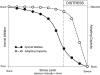
Effigy
Effigy 2-ii Hypothetical depiction of the relationship of stress, distress, adaptive capacity, and animal welfare. An beast's quality of life may be progressively deteriorating while it is yet successfully coping with a stressor. The precise (more...)
Onset of distress can be difficult to recognize. A rubber assumption is to follow the fourth principle of the U.Southward. Regime Principles for Utilization and Care of Vertebrate Animals used in Testing, Enquiry and Teaching: "Proper apply of animals, including the avoidance or minimization of discomfort, distress, and pain when consistent with sound scientific practices, is imperative. Unless the contrary is established, investigators should consider that procedures that cause pain or distress in homo beings may cause pain or distress in other animals" (IRAC 1985). A degree of critical anthropomorphism, outlined above and in the writings of Morton and colleagues (Morton et al. 1990), coupled with behavioral assessments will probable provide the most direct understanding of an animal'southward response to a stressor. Useful indicators include the beast's choice to continue or stop feeding while in a stressful situation, choice tests that demonstrate how (non)aversive a detail stressor is, or demand studies that titrate the extent of the animal'southward attraction or aversion to a potential stressor. These gauges of abstention or aversion may be complemented by physiological data measuring elevated hypothalamic-pituitary-adrenocortical axis (HPA) or sympathoadrenomedullary organisation (SAM) action (cistron or protein activation), elevated hormone levels, or increased activeness in target organs (e.thousand., heart rate, blood pressure, glucose levels). Many authors have pointed to the desirability of using multiple measures to obtain a more comprehensive data set (Rushen 1991). It is important to underscore that reliance on a single measurement of stress may effect in erroneous conclusions. Affiliate 3 provides more than details on distress recognition.
IMPLICATIONS FOR RESEARCH
There is a rich literature documenting the interference of stress in behavioral and/or physiological endpoints. Strong evidence in rodents has shown that mild stress of ii-3 months duration—a regimen that produces no signs of overt distress—alters the animals' performance in tests of feet, depression, and memory (D'Aquila et al. 1994; Rossler et al. 2000; Song et al. 2006; Willner 1997). Other findings signal that rats' habituation to a test environment can dramatically affect their response to a toxic substance (Damon et al. 1986). On the other hand, in some cases (such as lower anxiety beliefs in the elevated plus maze) the effects of stress may really exist beneficial to the experimental process, indicating that prolonged stress may not exist uniformly detrimental. Affiliate 3 documents the contagion of experimental data by unwanted or uncontrolled stress due to inadequate husbandry, noisy environments, olfactory stimuli, or other factors.
The touch on of distress on both animal welfare and research results is probable even more pronounced than that of stress. Animals exposed to prolonged severe stress experience underlying changes in physiological functions (e.g., gastric lesions [Ushijima 1985] or immunosuppression [Tournier 2001]) that tin can interfere with experimental manipulations; change experimental variables such every bit behavior (Morton and Griffiths 1985), drug dosing (Saranteas et al. 2004) and clearance; change the progress of a disease (Johnson et al. 2006); and contribute to morbidity and bloodshed. A variety of stressors tin can contribute to unintended distress, from postoperative pain or infection to barren housing conditions or the solitary confinement of an private of a social species (Gunn and Morton 1995; Morton et al. 1993). Stereotypies, abnormal repetitive behaviors indicative of poor well-being (Garner et al. 2003) that are frequently observed in distressed animals, are thought to reflect defective encephalon function (Würbel 2001) and to be a issue of poor beast welfare (Stonemason and Latham 2004). Stereotypies are thus likely to interfere with behavioral, neuroscience, and pharmacological studies.5
The affect of stress and distress on the quality of scientific enquiry can effect in the generation of compromised data, which in turn necessitates the use of more than animals. This outcome is inconsistent with two of the Three Rs: reduction in the number of animals used in an experiment, and refinement of the protocol to minimize or eliminate distress for the animals used (Russell and Burch 1959).
CONCLUSIONS
In an endeavor to reduce the confusion surrounding the definitions of stress and distress and as a basic framework to inform hereafter research in these areas, the Committee offers the following summary of distinctions between the two concepts:
-
Stress and distress are dissociable concepts, distinguished by an animal'due south power or inability to cope or adapt to changes in its firsthand environment and feel.
-
Stress responses are normal reactions to environmental or internal perturbations and can be considered adaptive in nature. Distress occurs when stress is astringent, prolonged, or both.
-
The concepts of stress and distress can exist distinguished from that of welfare, in that an adaptive and beneficial stress response may occur against a backdrop of a transient negative emotional state.
-
Both stress and distress correspond potential complications in a wide range of experiments, and should exist proactively addressed by practiced experimental design.
REFERENCES
-
AVMA (American Veterinary Medical Association). Bug in fauna welfare. 2007. [Accessed Feb two]. Available at www
.avma.org/issues/animal_welfare. -
Bateson Thou, Matheson SM. Performance on a categorisation chore suggests that removal of ecology enrichment induces pessimism in convict European Starlings (Sturnus vulgaris). Anim Welfare. 2007;xvi(Suppl):33–36.
-
Bentham J. An Introduction to the Principles of Morals and Legislation. Boston: Adamant Media Corp.; 1879.
-
Blanchard RJ, McKittrick CR, Blanchard DC. Animal models of social stress: Effects on beliefs and brain neurochemical systems. Physiol Behav. 2001;73(3):261–271. [PubMed: 11438351]
-
Brambell FWR. Report of the Technical Commission to Inquire into the Welfare of Animals Kept Under Intensive Livestock Husbandry Systems. London: HMSO; 1965.
-
Carroll BJ, Curtis GC, Mendels J. Neuroendocrine regulation in depression, I: Limbic system-adrenocortical dysfunction. Arch Gen Psychiat. 1976;33(9):1039–1044. [PubMed: 962488]
-
Carstens E, Moberg GP. Recognizing hurting and distress in laboratory animals. ILAR J. 2000;41(ii):62–71. [PubMed: 11304586]
-
Crawley JN. What's Incorrect with My Mouse? Behavioral Phenotyping of Transgenic and Knockout Mice. New York: Wiley-Liss, John Wiley & Sons, Inc.; 2000.
-
Dallman MF, Akana SF, Cascio CS, Darlington DN, Jacobson L, Levin Northward. Regulation of ACTH secretion: Variations on a theme of B. Recent Prog Horm Res. 1987;43:113–173. [PubMed: 2819993]
-
Damon EG, Eidson AF, Hobbs CH, Hann FF. Effect of acclimation to caging on nephrotoxic response of rats to uranium. Lab Anim Sci. 1986;36(ane):24–27. [PubMed: 3959530]
-
D'Aquila PS, Encephalon P, Willner P. Effects of chronic mild stress on operation in behavioural tests relevant to anxiety and depression. Physiol Behav. 1994;56(5):861–867. [PubMed: 7824585]
-
Droste SK, Gesing A, Ulbricht S, Muller MB, Linthorst AC, Reul JM. Effects of long-term voluntary exercise on the mouse hypothalamic-pituitary-adrenocortical axis. Endocrinology. 2003;144(vii):3012–3023. [PubMed: 12810557]
-
Duncan IJH. Science-based assessment of animal welfare: Farm animals. Rev Sci Tech OIE. 2005;24(2):483–492. [PubMed: 16358502]
-
Fraser D, Weary DM, Pajor EA, Milligan BN. A scientific conception of animal welfare that reflects ethical concerns. Anim Welfare. 1997;6(3):187–205.
-
Garner JP, Meehan CL, Mench JA. Stereotypies in caged parrots, schizophrenia and autism: Evidence for a common machinery. Behav Encephalon Res. 2003;145(1-2):125–134. [PubMed: 14529811]
-
Gillis South, Crabtree GR, Smith KA. Glucocorticoid-induced inhibition of T cell growth factor production. I. The effect on mitogen-induced lymphocyte proliferation. J Immunol. 1979;123(four):1624–1631. [PubMed: 314468]
-
Gunn D, Morton DB. Twenty-four 60 minutes study of the behavior of New Zealand White rabbits in cages. Appl Anim Behav Sci. 1995;45:277–292.
-
Hedrick H, Bullock G, editors. The Laboratory Mouse. San Diego: Elsevier Academic Press; 2004.
-
IRAC (Interagency Enquiry Animate being Commission). The U.S. Authorities Principles for the Utilization and Care of Vertebrate Animals Used in Testing, Enquiry, and Training. Federal Register. Vol. 50, No. 97 (May twenty, 1985). Office of Scientific discipline and Technology Policy; 1985. [Accessed Jan thirty, 2008]. Available at: http://grants
.nih.gov /grants/olaw/references/phspol .htm#USGovPrinciples. [PubMed: 11655791] -
Johnson RR, Prentice TW, Bridegam P, Immature CR, Steelman AJ, Welsh Thursday, Welsh CJ, Meagher MW. Social stress alters the severity and onset of the chronic phase of Theiler's virus infection. J Neuroimmunol. 2006;175(1-ii):39–51. [PubMed: 16631261]
-
Kemnitz JW, Roecker EB, Weindruch R, Elson DF, Baum ST, Bergman RN. Dietary brake increases insulin sensitivity and lowers blood glucose in rhesus monkeys. Am J Physiol-Endoc M. 1994;266(4):E540–E547. [PubMed: 8178974]
-
Kirkwood JK. Quality of life: The heart of the matter. Anim Welfare. 2007;16:3–7.
-
Lawler DF, Evans RH, Larson BT, Spitznagel EL, Ellersieck MR, Kealy RD. Influence of lifetime food restriction on causes, time, and predictors of death in dogs. J Amer Vet Med Assoc. 2005;226:225–231. [PubMed: 15706972]
-
Maier SF, Watkins LR. Stressor controllability and learned helplessness: The roles of the dorsal raphe nucleus, serotonin, and corticotropin releasing hormone. Neurosci Biobehav R. 2005;29(four-5):829–841. [PubMed: 15893820]
-
Stonemason GJ, Latham NR. Can't cease, won't terminate: Is stereotypy a reliable animal welfare indicator? Anim Welfare. 2004;13:S57–S69.
-
Mench JA. Why information technology is important to sympathise animal beliefs. ILAR J. 1998;39:twenty–26. [PubMed: 11528062]
-
Messaoudi I, Warner J, Fischer One thousand, Park B, Hill B, Mattison J, Lane MA, Roth GS, Ingram DK, Picker LJ, Douek DC, Mori Chiliad, Nikolich-Zugich J. Delay of T cell senescence by caloric restriction in anile long-lived nonhuman primates. P Natl Acad Sci USA. 2006;103(51):19448–19453. [PMC free article: PMC1748246] [PubMed: 17159149]
-
Moberg GP. Problems in defining stress and distress in animals. J Am Vet Med Assoc. 1987;191(10):1207–1211. [PubMed: 3692954]
-
Moberg GP. When does stress go distress? Lab Anim. 1999;28(4):422–426.
-
Moberg GP. Biological response to stress: Implications for animal welfare. In: Moberg GP, Mench JA, editors. The Biological science of Fauna Stress. Wallingford, Britain: CAB International; 2000. pp. i–21.
-
Morton DB, Griffiths PHM. Guidelines on the recognition of hurting, distress and discomfort in experimental animals and an hypothesis for cess. Vet Tape. 1985;116(16):431–436. [PubMed: 3923690]
-
Morton DB, Burghardt GM, Smith JA. Critical anthropomorphism, beast suffering, and the ecological context. Hastings Cent Rep. 1990;20(3):S13–S19. [PubMed: 11650362]
-
Morton DB, Jennings Thou, Batchelor GR, Bell D, Birke L, Davies K, Eveleigh JR, Gunn D, Heath One thousand, Howard B, Koder P, Phillips J, Poole T, Sainsbury AW, Sales One thousand, Smith DJA, Stauffacher M, Turner RJ. Refinements in rabbit husbandry. Lab Anim. 1993;27(4):301–329.
-
Munck A, Guyre PM, Holbrook NJ. Physiological functions of glucocorticoids in stress and their relations to pharmacological deportment. Endocr Rev. 1984;five(one):25–44. [PubMed: 6368214]
-
NRC (National Research Council). Recognition and Alleviation of Pain and Distress in Laboratory Animals. Washington, DC: National Academy Press; 1992. [PubMed: 25144086]
-
NRC. Guidelines for the Care and Use of Mammals in Neuroscience and Behavioral Inquiry. Washington, DC: The National Academies Press; 2003a. [PubMed: 20669478]
-
Nuffield Quango on Bioethics. The Ideals of Enquiry Involving Animals. London: Nuffield Council on Bioethics; 2005.
-
Phelps EA, LeDoux JE. Contributions of the amygdala to emotion processing: From animal models to homo behavior. Neuron. 2005;48(2):175–187. [PubMed: 16242399]
-
Rossler AS, Joubert C, Chapouthier G. Chronic mild stress alleviates anxious behaviour in female mice in 2 situations. Behav Procedure. 2000;49(3):163–165. [PubMed: 10922529]
-
Rushen J. Issues associated with the interpretation of physiological data in the assessment of animal welfare. Appl Anim Behav Sci. 1991;28(iv):381–386.
-
Russell WMS, Burch RL. The Principles of Humane Experimental Technique. London: Methuen; 1959.
-
Saranteas T, Mourouzis C, Dannis C, Alexopoulos C, Lollis Due east, Tesseromatis C. Effect of various stress models on lidocaine pharmacokinetic properties in the mandible after masseter injection. J Oral Maxil Surg. 2004;62(7):858–862. [PubMed: 15218566]
-
Selye H. Stress without Distress. New York: New American Library; 1975.
-
Silver LM. Mouse Genetics: Concepts and Applications. New York: Oxford University Press; 1995.
-
Song L, Che W, Min-Wei Due west, Murakami Y, Matsumoto K. Harm of the spatial learning and memory induced by learned helplessness and chronic mild stress. Pharmacol Biochem Be. 2006;83(2):186–193. [PubMed: 16519925]
-
Tournier JN, Mathieu J, Mailfert Y, Multon Due east, Drouet C, Jouan A, Drouet E. Chronic restraint stress induces severe disruption of the T-cell specific response to tetanus toxin vaccine. Immunology. 2001;102(ane):515–523. [PMC free article: PMC1783154] [PubMed: 11168641]
-
Ushijima I, Mizuki Y, Yamada 1000. Development of stress-induced gastric lesions involves central adenosine A1-receptor stimulation. Brain Res. 1985;339(2):351–355. [PubMed: 2992704]
-
Willner P. Validity, reliability and utility of the chronic balmy stress model of depression: A 10-yr review and evaluation. Psychopharmacology. 1997;134(4):319–329. [PubMed: 9452163]
-
Würbel H. Ideal homes? Housing effects on rodent encephalon and behavior. Trends Neurosci. 2001;24(4):207–211. [PubMed: 11250003]
- 1
-
Detailed information on behavioral and physiological data of various subsets of murine inbred strains is available at the Mouse Phenome Database at the Jackson Laboratory; http://aretha
.jax.org /pub-cgi/phenome/mpdcgi. - ii
-
For additional discussion of what is normal or natural with regard to laboratory animals, run into Chapters 3 and 4.
- 3
-
The Veterinary's Oath outlines the moral obligation toward the alleviation of animal suffering by stating that "… I solemnly swear to apply my scientific cognition and skills for the benefit of society through … [in part] the relief of animal suffering…." (AVMA, http://www
.avma.org/issues /animal_welfare/). - 4
-
For more data on the effects of housing on brain part or enrichment see Chapter 3. Boosted data is contained in manufactures past the behaviorists Joseph Garner, Hanno Würbel, and Georgia Mason.
- 5
-
It should be noted that the negative connotations of stereotypies are not universally accepted. For further give-and-take run across Affiliate 3.
Source: https://www.ncbi.nlm.nih.gov/books/NBK4027/
Posted by: mallarduntes1948.blogspot.com
0 Response to "What Animal Behaviors Indicate Stress Or Poor Health"
Post a Comment